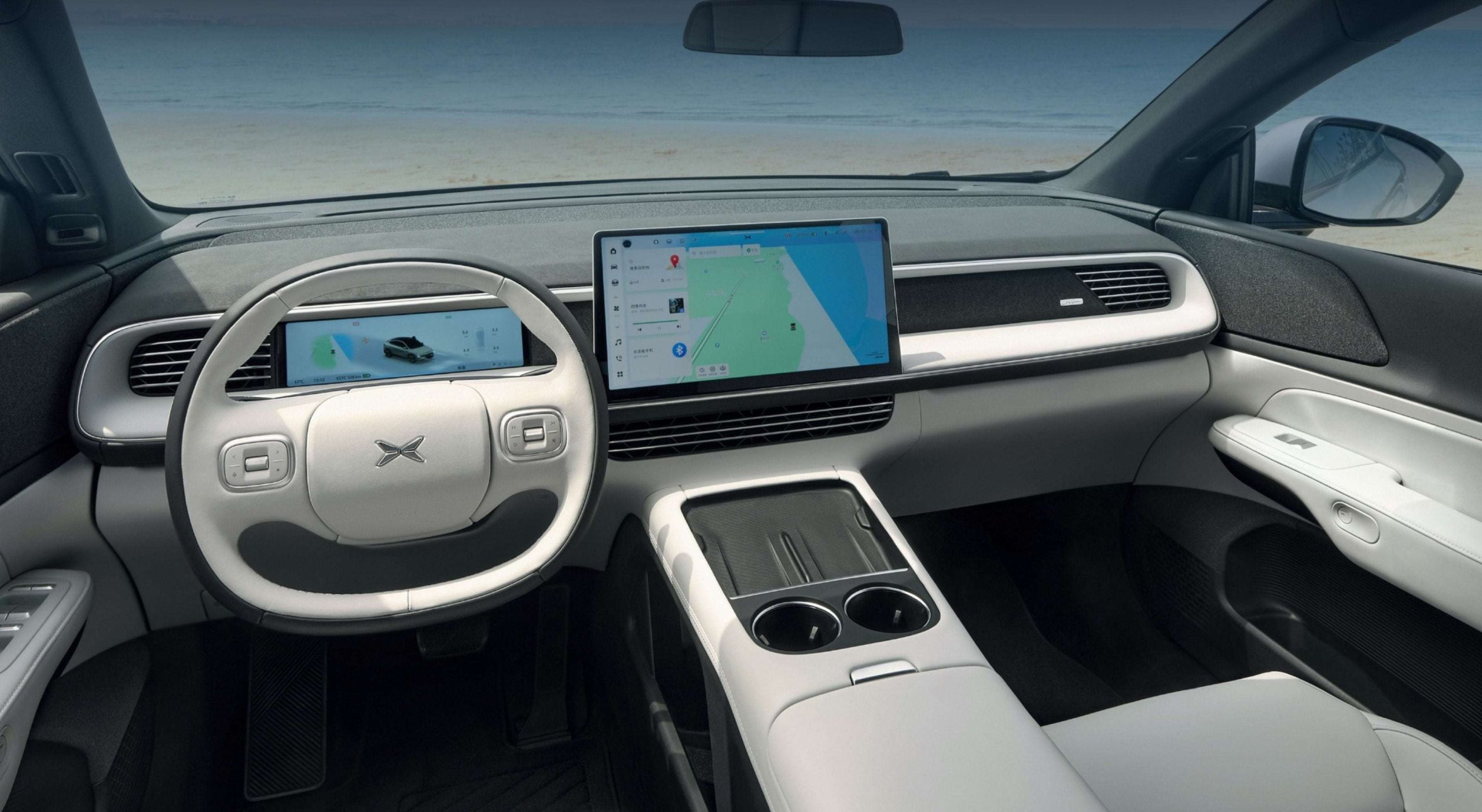
An electric SUV such as the XPENG G6 suits Australian driving because its specifications address range, charging time, cabin space and highway performance rather than relying on one headline figure. The current Australian G6 offers up to 525 km WLTP range, an 800V electrical platform and DC charging up to 451 kW on Long Range and Performance versions. XPENG lists a 10–80% charge time of 12 minutes under suitable conditions. The Long Range uses an 80.8 kWh LFP battery, consumes 17.9 kWh/100 km on 20-inch wheels, provides 571 litres of boot space and produces 218 kW with 440 Nm.
Australia makes range useful in a different way from many smaller markets. A car may spend most weekdays covering short suburban distances, then travel several hundred kilometres on a motorway or regional road at the weekend. A rated figure above 500 km gives an owner more room between charging stops, although WLTP is a standardised test rather than a promise of real-world distance.
XPENG Australia currently lists 525 km WLTP for the G6 RWD Long Range on 20-inch wheels. The Standard Range is rated at 480 km on 18-inch wheels and 470 km on optional 20-inch wheels, while the AWD Performance is rated at 510 km. Wheel size alone therefore accounts for a 10 km difference on the Standard Range specification, showing why two examples of the same vehicle can return different energy use.
Range should be read together with consumption. The Long Range is listed at 17.9 kWh/100 km, the Standard Range at 16.6 kWh/100 km on 18-inch wheels, and the AWD Performance at 18.4 kWh/100 km. A larger battery does not automatically make an EV more economical.
Those figures lead naturally to charging, because an EV that travels far but spends too long connected to a charger can still be inconvenient on an interstate trip. The 2025-generation G6 moved to a high-voltage 800V platform and LFP batteries across the range, with a 68.5 kWh gross pack in the Standard Range and 80.8 kWh gross capacity in the Long Range and Performance versions.
The difference between the variants is visible in peak DC power:
| Australian G6 version | Gross battery | Peak DC charging | 10–80% claim | WLTP range |
|---|---|---|---|---|
| Standard Range | 68.5 kWh | 382 kW | 12 min | 480 km on 18-inch wheels |
| RWD Long Range | 80.8 kWh | 451 kW | 12 min | 525 km |
| AWD Performance | 80.8 kWh | 451 kW | 12 min | 510 km |
A 12-minute 10–80% figure assumes suitable battery temperature, charger output and operating conditions. A 150 kW public charger cannot deliver 451 kW simply because the vehicle accepts it, while charging power normally changes as state of charge rises. XPENG also states that the G6 uses CCS2 for DC charging and supports 11 kW AC charging, which is relevant because most charging does not need to happen at maximum DC power.
For an owner with home charging, AC power can cover routine daily use while fast DC charging is reserved for longer trips. XPENG lists a 5–100% AC charging time of 9.2 hours for the 80.8 kWh Long Range and Performance battery and 7.3 hours for the 68.5 kWh Standard Range battery. Overnight charging therefore fits a very different use case from a 12-minute motorway stop.
Charging performance also explains why battery chemistry matters. The current G6 uses lithium iron phosphate, or LFP, rather than the earlier combination of battery chemistries offered in previous G6 versions. XPENG's 2025 update replaced the earlier 66 kWh and 87.5 kWh battery choices with 68.5 kWh and 80.8 kWh LFP packs.
LFP generally offers good thermal stability and long cycle life, while its lower energy density compared with some nickel-rich chemistries can require careful packaging. In the G6, that packaging still leaves 571 litres behind the rear seats and 1,374 litres when the rear seats are folded. The Long Range carries a listed payload of 475 kg, giving a more useful measure of family practicality than boot volume alone.
A vehicle carrying four adults, luggage and accessories needs room in both the cabin and the weight allowance. The G6 is a five-seat SUV with a 2,115 kg listed kerb weight in Long Range specification and a 2,590 kg gross vehicle mass. The AWD Performance rises to 2,220 kg kerb weight and has a 470 kg payload rating, reflecting the extra motor and all-wheel-drive hardware.
For buyers comparing a mid size electric suv, external dimensions are only part of the packaging question. XPENG lists the G6 at about 4.75 metres long and 1.92 metres wide, while its coupe-style body reaches a drag coefficient of 0.248 Cd. Lower aerodynamic resistance becomes increasingly relevant as road speed rises because aerodynamic drag grows rapidly with speed.
The roof shape therefore serves more than appearance, but cabin comfort still matters in Australian heat. XPENG states that the panoramic roof provides 99.99% UV protection, while the Australian model offers front-seat ventilation, heating and power adjustment on applicable specifications. Climate control still consumes battery energy, so pre-conditioning while the car is connected to power can help reduce the amount drawn from the battery immediately after departure.
Performance introduces another trade-off. The RWD Long Range produces 218 kW and 440 Nm and reaches 100 km/h in a claimed 6.7 seconds. The AWD Performance raises output to 358 kW and 660 Nm, cutting the 0–100 km/h time to 4.13 seconds while retaining a 510 km WLTP rating. The Standard Range produces 185 kW and 440 Nm and records 6.94 seconds.
Those numbers are useful beyond acceleration testing. Electric motors deliver torque without waiting for a conventional gearbox to select a lower ratio, which can make motorway merging and overtaking more predictable. All G6 versions listed for Australia have a 202 km/h top speed, although legal road use is governed by local limits rather than vehicle capability.
A 4.13-second acceleration figure is impressive, but an Australian family owner may notice the 660 Nm output more often when joining moving traffic than when measuring a standing start.
Chassis layout matters once the road becomes uneven. The G6 uses double-wishbone independent front suspension and a five-link independent rear arrangement. Front and rear ventilated disc brakes are fitted, and Eco, Comfort, Sport and Individual modes allow the accelerator and vehicle responses to be adjusted for different trips. The listed turning radius is 5.8 metres.
Ride behaviour also has to be considered alongside wheel choice. On the Standard Range, moving from 18-inch to 20-inch wheels changes official consumption from 16.6 to 16.9 kWh/100 km and lowers WLTP range from 480 to 470 km. That is roughly a 2% increase in listed energy consumption, before accounting for tyre pressure, road surface, temperature, passenger mass or motorway speed.
Software has become another part of day-to-day EV ownership. The Australian G6 combines a 10.25-inch digital instrument display with a 15.6-inch central touchscreen and supports Apple CarPlay and Android Auto. XPENG also lists over-the-air software updates through Wi-Fi or 4G, allowing compatible vehicle software to receive later revisions without a conventional workshop visit.
Driver-assistance equipment includes adaptive cruise control, lane centring, lane-change assistance on relevant versions, autonomous emergency braking, blind-spot detection, rear cross-traffic alert and driver-state monitoring. Parking equipment includes a surround-view system and enhanced automatic parking assistance. None removes the driver's responsibility; XPENG specifically states that XPILOT Assist cannot handle every traffic, road or weather condition.
That limitation is worth considering in Australia, where one trip can move from well-marked metropolitan roads to poorly lit regional sections. Cameras and assistance software work within defined conditions, so lane markings, weather, visibility and road layout can affect operation. A feature list should therefore be checked during a test drive rather than treated as a substitute for normal observation.
Practical electrical use continues when the car is parked. The Long Range and AWD Performance list vehicle-to-load output up to 6 kW. V2L allows compatible external electrical equipment to use energy from the traction battery, which can be useful for camping equipment, portable appliances or other suitable devices where mains power is unavailable.
Energy cost still depends on where the electricity comes from. At 17.9 kWh/100 km, 1,000 km of official-cycle driving corresponds to about 179 kWh drawn for propulsion before real-world charging losses are considered. At 18.4 kWh/100 km, the Performance specification would use about 184 kWh over the same theoretical distance, around 2.8% more.
Public fast charging can cost more per kWh than residential electricity, so a driver covering 15,000 km per year should calculate home and public charging separately instead of multiplying one tariff by annual distance. Weather, air conditioning, tyre choice and sustained highway speeds can also move real consumption away from the official figure.
Service requirements are different from those of a petrol SUV because there is no engine oil, spark-plug replacement or exhaust system. Friction brakes can also be used less frequently when regenerative braking slows the vehicle, although tyres, suspension, brake fluid, cabin filters and brake components still need inspection and replacement according to condition and the service schedule.
By 2026, comparing electric SUVs on battery capacity alone leaves out too much information. For Australian use, the more useful comparison places 525 km WLTP range beside 451 kW peak DC charging, 17.9 kWh/100 km consumption, 571 litres of luggage space, a 475 kg payload rating and 11 kW AC charging. Those measurements describe how the G6 behaves during commuting, overnight charging, family travel and longer highway journeys far better than one range number by itself.